
sdMPLS® — the multi-site network technology
The best of MPLS and SD-WAN, in a single solution, at the best cost.
sdMPLS combines the control of MPLS with the agility of SD-WAN in a single solution, at the price of standard access links — and off the public Internet. A French technology designed and operated by Flex.eu.
Three entry points depending on who you are
You run a multi-site business
Keep control, cut the bill, simplify the architecture.
For businesses →You are a telecom consultancy or procurement advisor
A third way to build into your tenders, described in neutral, verifiable criteria.
Consultants' area →You are a distributor or integrator
Powered by sdMPLS: an offer your customers will ask for.
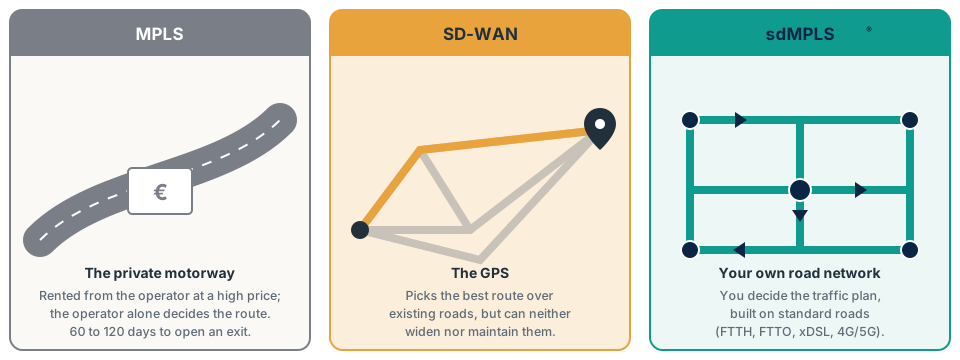
Partners' area →The problem in one picture
Private motorway, GPS, or your own road network?
Three pillars
What sdMPLS brings
The control of MPLS
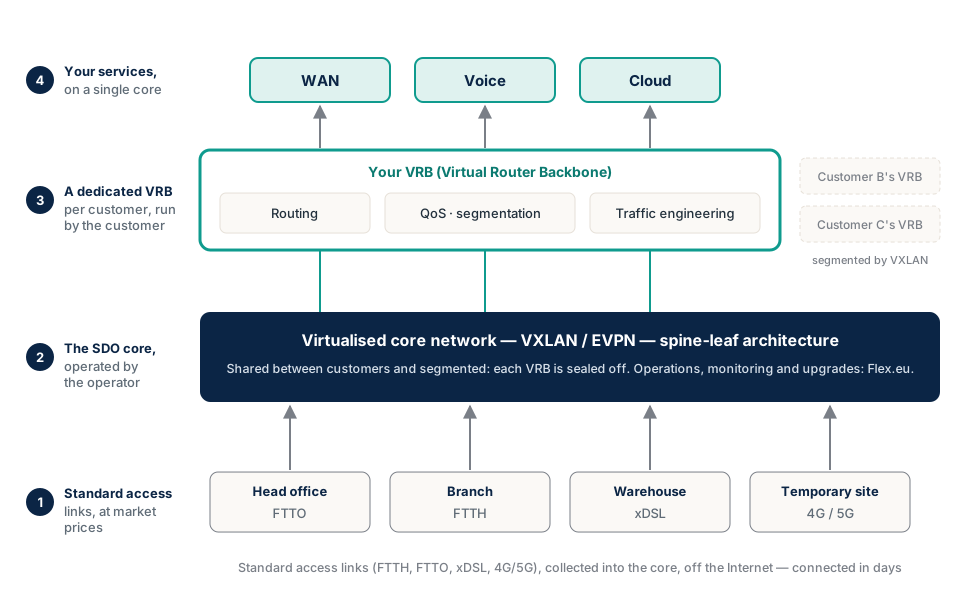
A private core network that you control: routing, QoS, segmentation, traffic engineering. SD-WAN only touches the edges; sdMPLS hands you the core.
The agility and cost of SD-WAN
Standard access links (FTTH, FTTO, xDSL, 4G/5G) at market prices. A site whose link already exists is connected in a few days, and every change to the network takes effect instantly from the VRB, where MPLS takes 60 to 120 days and goes back through the operator for every change.
A single infrastructure
WAN, telephony and cloud on one VXLAN core, for customers who also carry their telephony and hosting on the SDO core; the others keep their existing services and converge only the WAN onto it. Either way, a single architecture to understand and operate, which evolves from the VRB.
A private network, off the public Internet
Standard access links does not mean Internet links. The sites' links (FTTH, FTTO, xDSL, 4G/5G) are delivered into the sdMPLS core network through direct private collection gateways between operators, with private APNs for mobile: traffic between the customer's sites never transits the public Internet or third-party operators. Internet access goes through a single, controlled Internet exit at the core network, via Flex.eu's BGP routers and transit, shared behind a firewall according to several technical models — including for the 4G/5G SIM cards issued to employees, which join the company network with the same security policy as the sites. Just like MPLS, then: a private network with a single, controlled Internet exit.
Quick comparison
MPLS, SD-WAN, sdMPLS: four differences that matter
Operator MPLSSD-WANsdMPLS
| Criterion | Operator MPLS | SD-WAN | sdMPLS |
|---|---|---|---|
| Who controls the core network | The operator, alone | The customer controls its site equipment and policies; the operator's core stays out of reach | The customer, through its VRB |
| Access links | Specific, costly MPLS links | Standard Internet links | Standard access links (FTTH, FTTO, xDSL, 4G/5G), collected directly into the core |
| Site activation | 60 to 120 days | Days to weeks | Days (existing link); changes take effect instantly |
| WAN + voice + cloud | Three separate infrastructures | Optimises the WAN; voice and cloud stay on separate infrastructures | A single infrastructure |
Market figures
Why businesses are looking for an MPLS alternative
Source: Flex.eu synthesis of public market data (analysts, operators), SDO study, March 2026. See the details and the other sourced figures.
Powered by sdMPLS
Delivered by local partners
sdMPLS is delivered by local integrator and operator partners who display the Powered by sdMPLS label.

Who is behind it
Flex.eu, French telecom operator
Flex.eu, a French telecom operator founded in 2011, designs and operates the SDO core network on which sdMPLS is built.